01 / HUMAN22 resources
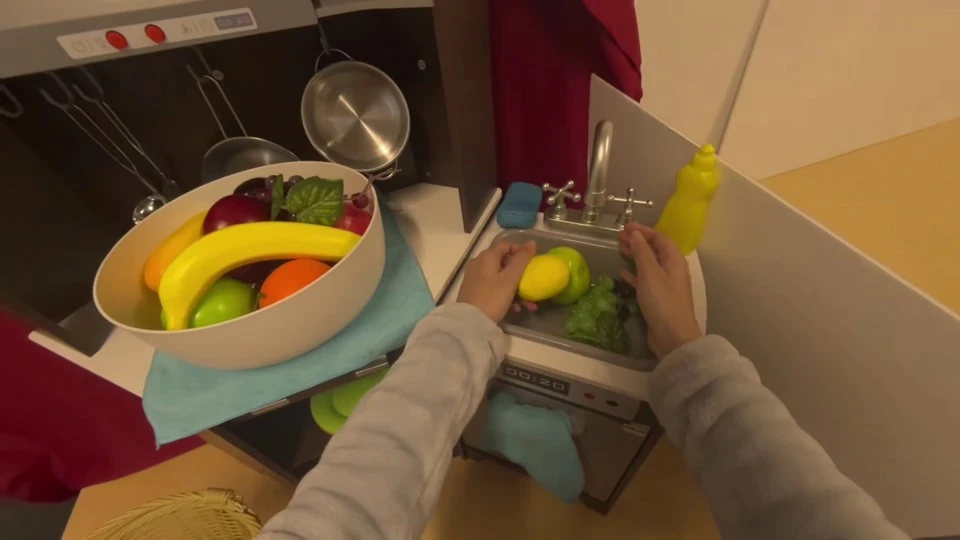
Egocentric human videos
EPIC-KITCHENS · Ego4D
EgoDex · HD-EPIC
Browse resourcesEgoDex · HD-EPIC
Egocentric human video captures close-range hand–object interactions and how tasks unfold, without recording robot actions.
We review four ways to learn or adapt robot manipulation policies from EHV: what information they extract, how policies use it, and what additional data they need for training or deployment.
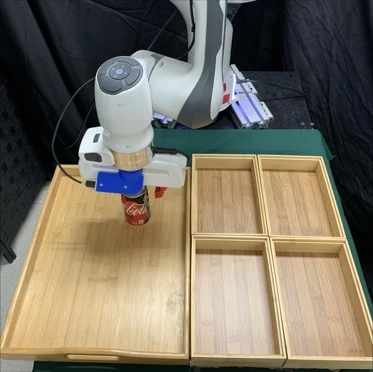
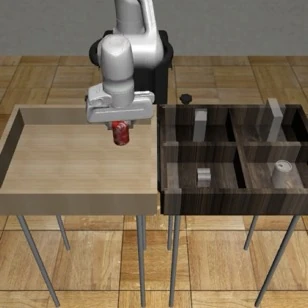
Images: EgoDex, RoboMimic, RoboTurk
Loading references…
| REF. | WORK | DISCUSSION | YEAR |
|---|
Check whether video-derived steps are feasible with available robot skills, and verify their outcomes through execution feedback.
Compare matched, mismatched, and absent context with fixed policy weights, and report adaptation gains against robot interaction budgets.
Preserve task outcomes across embodiments while accounting for reconstruction uncertainty, missing contact information, and the cost of extra sensing.
Measure robot-data efficiency and generalization against equally sized non-egocentric video baselines, using diagnostics and robot trials to explain the gains.
Test whether predictions respond correctly to action changes and help the robot replan or recover within closed-loop latency limits.
@misc{wang2026egocentrichumanvideorobot,
  title={From Egocentric Human Video to Robot Manipulation in the Era of Embodied Intelligence},
  author={Yi Wang and Jingqiu Wu and Lei Yao and Zhaoshuo Li and Haoyu Zhu and Yirui Zhou and Huaiyuan Xu and Ying Zheng and Chuang Yang and Lap-Pui Chau},
  year={2026},
  eprint={2611.13610},
  archivePrefix={arXiv},
  primaryClass={cs.RO},
  url={https://arxiv.org/abs/2611.13610},
}